
The 2026 AFl-CIO Constitutional Convention: A Brief Oral History from the WGAE Delegates
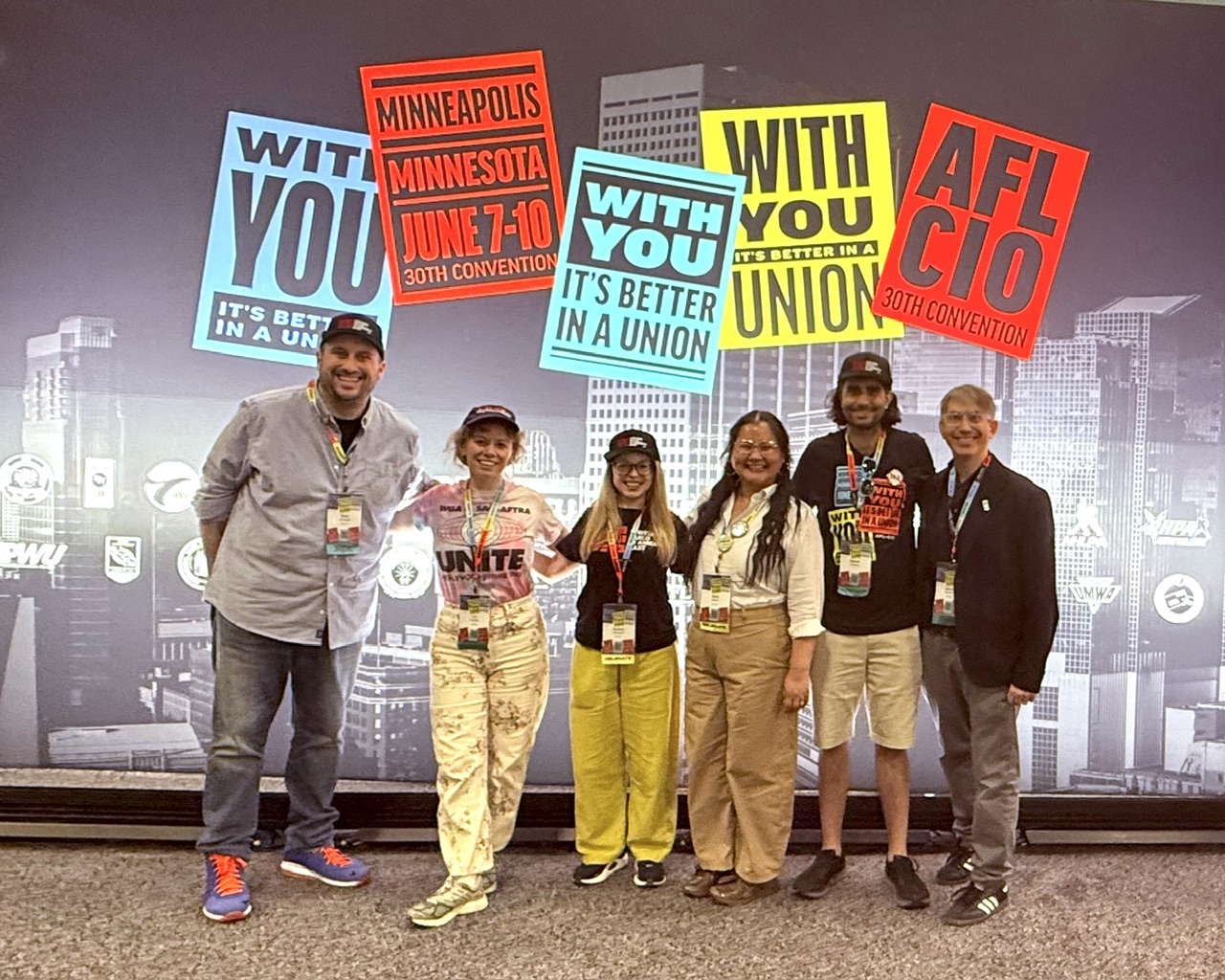 The AFL-CIO held its 30th Constitutional Convention from June 5 – 7 in Minneapolis, Minnesota. The convention, which happens every four years, brought together 1,900 member delegates and union staff from the 65 affiliated unions of the AFL-CIO.
Over the course of three days, delegates elected the leadership of the AFL-CIO voted on a diverse slate of resolutions that established the mission for the AFL-CIO’s work and set a vision and mandate for building and strengthening the labor movement. The convention also featured a number of panels, guest speakers and workshops.
Secretary-Treasurer Sasha Stewart and Vice President of Online Media Sara David served as delegates, and Film/Television/Streaming Council member Liz Hynes and Online Media Council member Nitish Pahwa served as alternative delegates, on behalf of the Writers Guild of America East. Executive Director Sam Wheeler and Director of Communcations & Policy Jason Gordon attended as staff representatives for the Guild.
Below, Sasha, Sara, Liz and Nitish reflect on the convention in their own words.
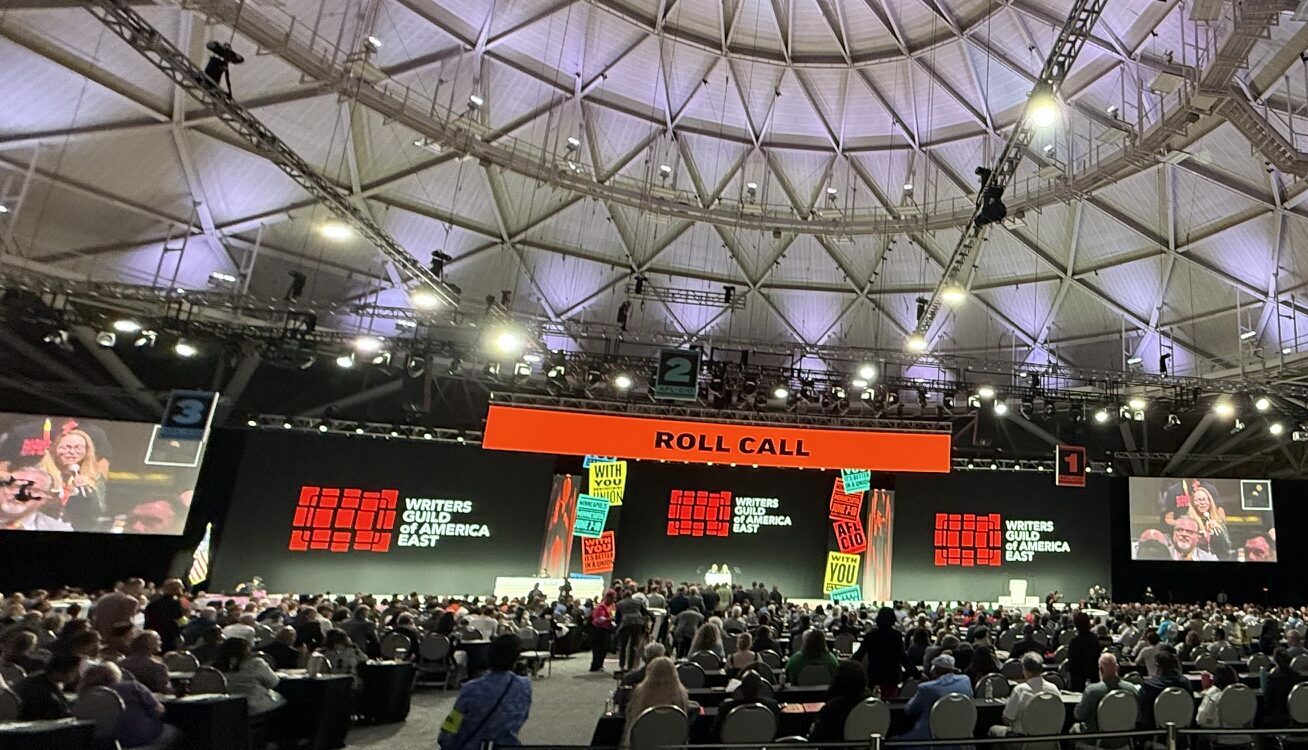 SASHA: The WGAE is an affiliate of the AFL-CIO. For me, that has meant that we show up for each other – whether it’s us picketing with nurses this winter or the countless AFL-CIO affiliate unions who showed up for us in 2023. But getting to go to the AFL-CIO convention felt like seeing the labor movement in action in a whole new way. Solidarity was in the air. From the first day, they gave us our marching orders (and pins! To wear when flying Delta to help their 30,000 flight attendants win their organizing campaign). And it only grew from there. With panels on building worker power, civil rights, the first amendment, voting rights, AI, immigration, veterans’ issues, and economic justice, it was a dizzyingly intense and immensely gratifying immersion in everything labor.
NITISH: I’m still very new to my position on the WGAE Council, and newer still to the finer workings of the broader labor movement—the umbrella organizations, affiliated institutions, committees, and sister organizers that make up the structural support for North America’s unions. So I felt a little green, attending the AFL-CIO’s 30th Constitutional Convention as an alternate delegate—but it only took a few days to feel invigorated and inspired.
SARA: I am so lucky that the WGAE was my introduction to the labor movement because we are a strong activist union with members rooted in creativity and courage—the exact traits needed to imagine and fight for a new vision of the future. It can be hard to feel connected to that creativity and courage as we navigate the layoffs and shutdowns of the media industry, and try to survive our fascist government’s complete disregard of basic human rights.
LIZ: Minneapolis was chosen as the location of this year’s AFL-CIO conference long before ICE’s immigration raids besieged the city, but there was no greater location to celebrate worker solidarity. The same force that drove ordinary Minnesotans to fight and die protecting their neighbors in the streets is the same force that brings union workers together the world over: the belief that the rich and powerful don’t have a monopoly on a decent life, that such a life is worth fighting for, and that no force is unstoppable when we join to oppose it as one.
 SASHA: Being in Minneapolis in particular was an emotional experience. As they opened the convention, the organizers brought to the stage dozens of union members who had helped out as ICE tried to raid and invade their city. We heard stories of how unions and organizing had been crucial in developing the rapid response necessary to pushing back. It was inspiring, and a challenge for all of us to live up to their example.
SARA: The AFL-CIO conference reignited my belief that labor unions are the most accessible and effective vehicle for everyday people to wield collective power and win material change. I was inspired by all our sibling unions fighting for better protections for immigrant workers. As a Filipino immigrant, I was especially moved by the story of the IAM fighting to free Max Londonio from ICE detention, where he was unjustly held for two months after returning from a family vacation to the Philippines.
LIZ: Every panel was a stark reminder that all our struggles, whether against exploitative employers or an unjust immigration system, are inextricably linked. The story that moved me most involved a machinist – Maximo from IAM Local 695 – who was detained by ICE, sent to prison, and given a blue jumpsuit to indicate his “crime” was an immigration offense. That night, every single incarcerated person with a blue jumpsuit was deported – except for Maximo, because his union had sent their lawyer. In the world we strive for, every person in that prison would have that same protection.
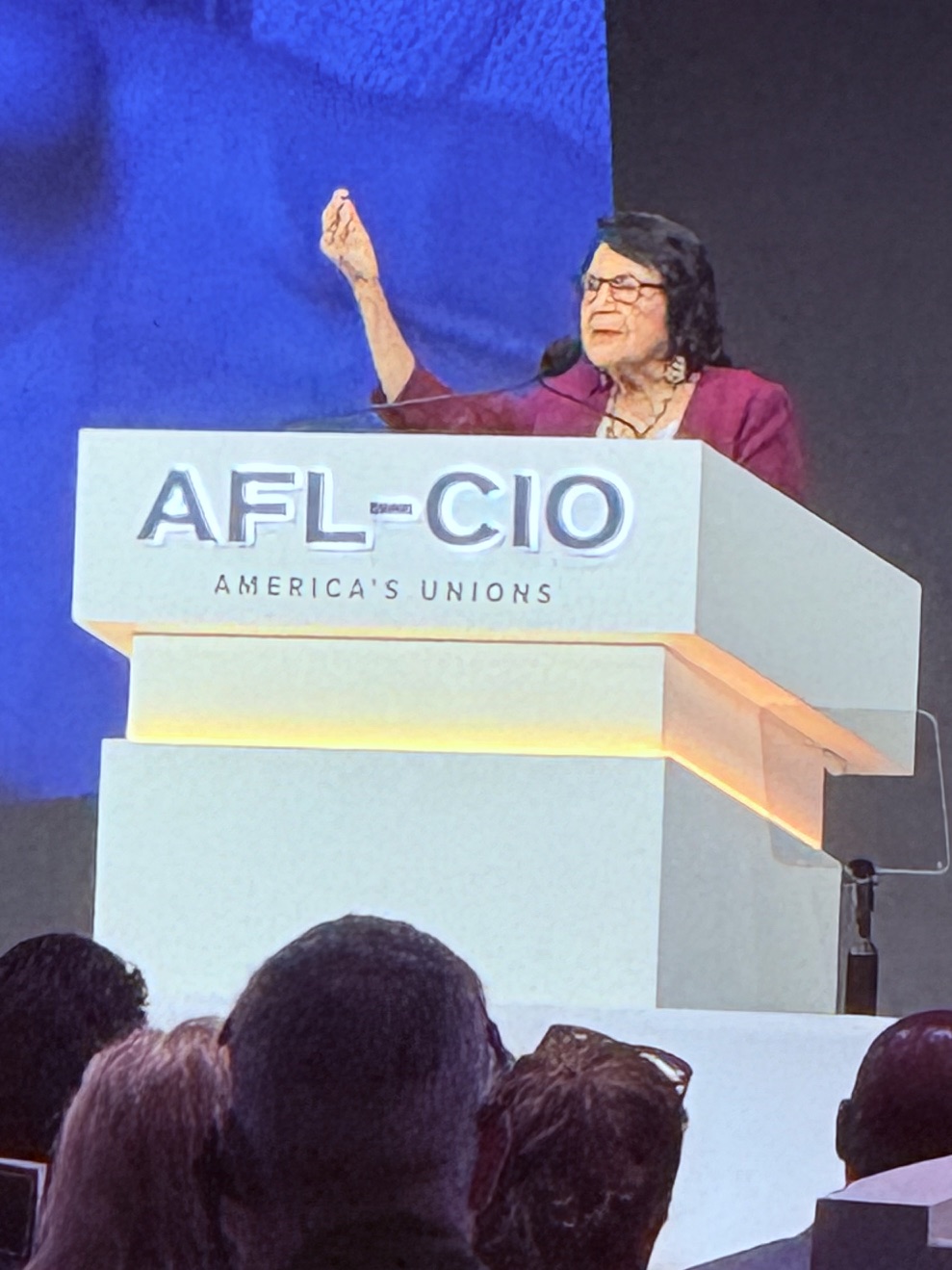 SASHA: Gwen Mills of Unite Here called for us to go on the offense even as they try to make us play defense, “Have a 10 to 20 year strategy.” Shawn Feinn of the UAW called for us to start electing more labor candidates into office. April Verrett of the SEIU said that focusing on women and workers of color, especially in the South, will always steer us in the right direction. Dolores Huerta gave a rousing speech calling for us not to run from human rights during these hard times – “When women, LGBTQ people, and people of color are attacked, we must stand together.” For her, this means, in part, labor getting behind the push for universal healthcare, daycare, and a free college education. She wants us to teach labor studies in schools. What a great idea!
LIZ: DOLORES HUERTA!
SASHA: Beyond panels and education, we passed a lot of resolutions. What’s a convention without voting? But even passing these resolutions became a full-throated endorsement of solidarity. With members from unions across the country explaining why these resolutions mattered and how we are all here to support one another.
NITISH: The difficult, intricate, ultimately affirming work in maintaining and advancing a workers’ coalition was laid bare: the appeals to common interests, the effort required to build solidarity across classes and disciplines, the persuasion needed to bring one or another peer onto one’s side, the compromises henceforth reached. It can seem so sprawling and unwieldy—between all the people and all the sectors involved, and all the factors incorporated into convention representation—but it never felt that way.
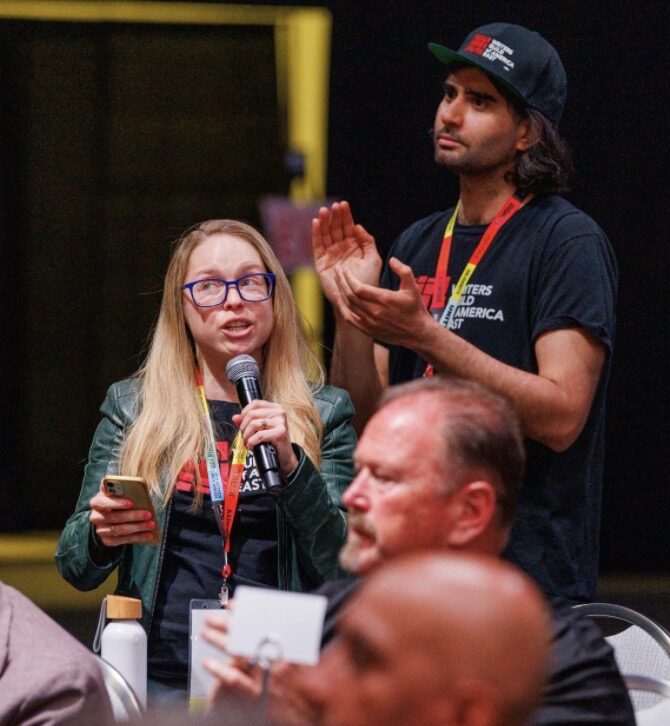
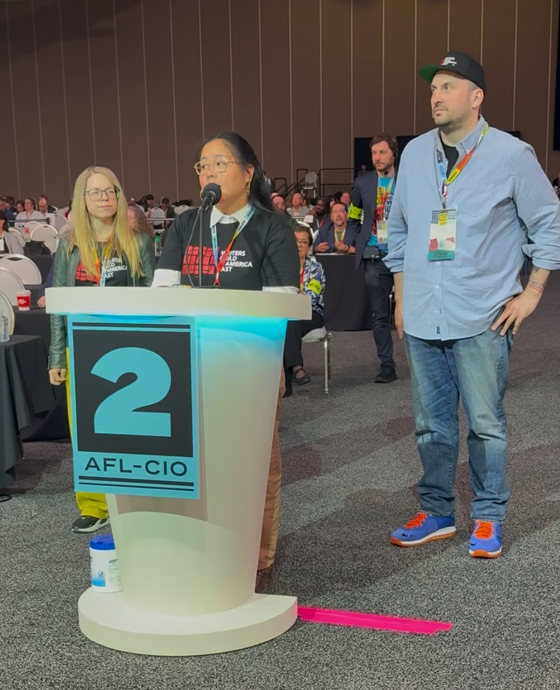 SASHA: Sara David spoke eloquently and passionately on a resolution to regulate AI, and I spoke (less) eloquently and (equally) passionately on a resolution to support a federal film and TV tax incentive.
LIZ: In our current labor environment, arguably the most hostile to unions since the Reagan administration, it can be very easy to succumb to despair.
NITISH: Convention leaders were admirably willing to name the severe setbacks and challenges facing AFL-CIO members, from the government employees purged by this administration, to the weakening of civil rights laws, to on-site deaths and dangers. But every speaker and attendee I saw addressed these issues with tenacity and specificity, laying out ideas for the path ahead and leading with messages of aspiration instead of despair.
SASHA: Something we heard a lot about was the need to imagine better. What does a worker-led future look like across all areas of life? To me, that’s a call to action for us writers. No matter what sector you’re in, we all have the opportunity to do this kind of collective imagining. We need a positive vision to strive for, not just the one the authoritarians and tech oligarchs pretend is inevitable. A speaker on the the civil rights panel said, “It is not 1960. You don’t have to wonder what you would have done. Decide now how you will build our new future.” WGAE members, I think we should accept this challenge!
LIZ: Time and time again, workers relayed stories of management employing the same tactics we witnessed from the studios during our 2023 strike. Union-busting is a thriving industry, and their job is way easier if they can kill you in the cradle. In addition to bloodletting at the bargaining table, they’re paid handsomely to dissuade us from organizing at all: to sell the lie that the fight isn’t even worth it, and cross their fingers that we buy it. But their business only survives because we do. Some of the largest companies in the world – Amazon, SpaceX, Starbucks, etc. – employ the same firm (Morgan Lewis, now serving as de facto General Counsel for the NLRB, loudly booed each time they were mentioned at this conference) in an attempt to destroy unions, because we remain the primary threat to their hegemony. Their sole mission is to destroy workers’ rights. Solidarity demands creativity; isolation erodes it. We have plenty of ideas. They only have one.
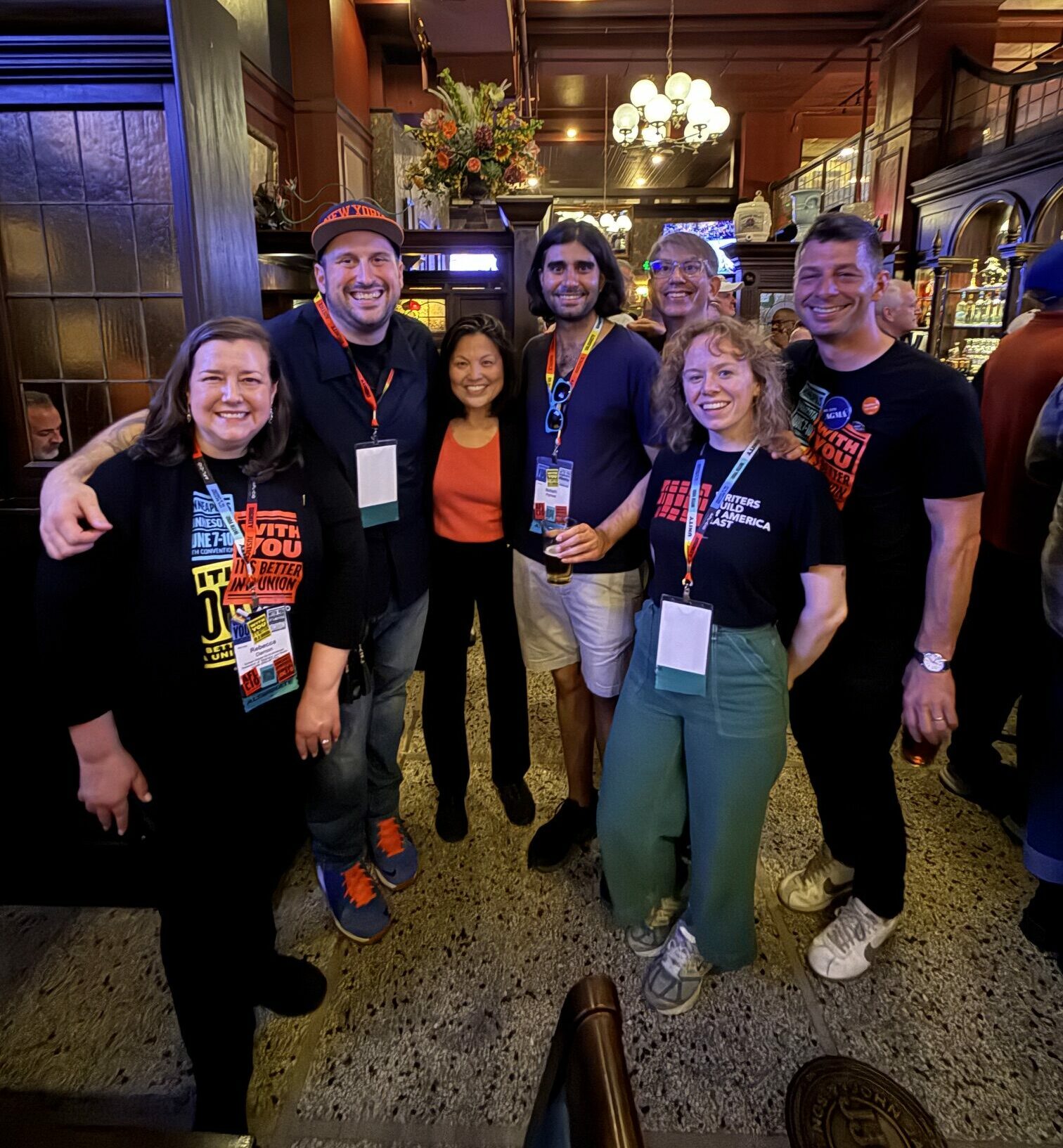 SASHA: As we demonstrated back in 2023 with our theme pickets, organizing is also fun! It was wonderful to get to hang out and strengthen our relationships with our fellow arts unions, a party hosted by the AFL-CIO Sports Council on the field of the Vikings Stadium, and an opportunity to go to a Lynx game (The WNBA Players Association is a part of the AFL-CIO!). It was another reminder that all our WGAE programming helps us build community, which helps us build power. Being fun is powerful.
LIZ: A great antidote to that malaise is a room full of thousands of union workers sharing stories and strategies to the soundtrack of a shockingly good DJ.
NITISH: I learned so much, not only about the architecture of this great institution, but of the resilience it takes to make worker empowerment a possibility. The work is only just beginning.
SASHA: When I flew out after our last day, I boarded the plane while proudly wearing my Support Delta Flight Attendants pin, which sparked conversation. The flight attendants I spoke with agreed with the need to unionize, and asked me how I knew about the campaign. “I was just at the AFL-CIO convention, and I can tell you everyone in that stadium has your back.” Sara Nelson of the Association of Flight Attendants said, “Solidarity is a force stronger than gravity.” That’s the power of the labor movement. It’s not easy to organize 30,000 people, but it’s a little easier knowing you’ve got millions more ready to stand up with you.
NITISH: Everyone I met was kind, welcoming, and genuinely interested in building bridges and power; the Solidarity Commons folks who hosted workshops, trainings, and information sessions were expert mentors, adept at applying their knowledge and experiences to situations that affect workers in every field.
LIZ: This conference renewed my gratitude for the WGAE’s unwavering ambition. When they’re not fighting relentlessly for our own members, our staff is incredibly tapped into the wider labor movement. They never miss a chance to spread the word about a solidarity opportunity (join our Signal chat!), and our members are excited to show up for other unions – especially in recent years, after going through the pain of a strike ourselves. We’re a relatively small union, but it’s rare that there’s a picket line in New York City without a WGAE presence. That makes me unbelievably proud. Here’s to the future we build together.
SARA: Unions are the first and only line of defense for our most vulnerable members, and knowing that the WGAE will fight to help each of us is truly a gift.
###